
Is Fire Risk Assessment Required for HMO in UK? Complete Legal Guide


A Question with a Clear Answer
If you're managing HMO (House in Multiple Occupation) in the UK, you've probably asked this question: "Do I need a fire risk assessment?"
The answer is unequivocal. Yes. Under current legislation, a comprehensive fire risk
assessment is a mandatory requirement for all HMOs. The distinction between professional
portfolio management and amateur landlording often comes down to how rigorously these
safety protocols are implemented. The consequences of getting it wrong are severe,
ranging from substantial fines to criminal prosecution.
This guide provides a detailed overview of everything you need to know about fire risk
assessments for HMOs in the UK. We will explore the legal requirements, the assessment
process, the associated costs, and the severe implications of non-compliance.
Disclaimer: This article provides general guidance only. Always seek independent legal, tax,
or financial advice before making decisions affecting your property or business.
The Legal Requirement: What the UK Law Dictates

Fire risk assessments for HMOs are not an optional extra; they are a fundamental legal requirement governed by multiple pieces of UK legislation. Understanding these frameworks is essential for any landlord or property manager aiming for operational excellence.
The Regulatory Reform (Five Safety) Order 2005 (RRO)
The primary legislation governing fire safety in HMOs is the Regulatory Reform (Fire Safety) Order 2005 (RRO). This order applies to all non-domestic premises and certain residential buildings, explicitly including HMOs
Under the RRO, the "responsible person"—typically the landlord, property manager, or managing agent— must ensure the following duties are fulfilled
Carry out a comprehensive fire risk assessment.
Identify potential fire hazards within the property.
Identify individuals who may be at risk.
Evaluate the overall risk of fire.
Implement measures to eliminate or significantly reduce fire risks.
Provide and maintain adequate fire safety measures.
Provide necessary information and training to staff and occupants.
Review and update the assessment regularly to reflect any changes.
Failure to carry out a fire risk assessment under the RRO is a serious criminal offence.
Penalties can include unlimited fines and up to two years of imprisonment. Furthermore,
corporate liability means that company directors can be held personally responsible for
breaches.
The Housing Act 2004 and HMO Licensing

The Housing Act 2004 also imposes stringent fire safety requirements for HMOs. Under this
Act, an HMO is defined as a property occupied by more than one household where the
occupants share basic amenities such as bathrooms or kitchens.
To comply with the Housing Act 2004 and secure mandatory, additional, or selective HMO
licensing, properties must feature:
Adequate fire precautions and means of escape.
Appropriate fire detection and alarm systems.
Emergency lighting on escape routes.
Clear fire safety signage.
Fire doors with self-closing mechanisms and intumescent seals.
Fire extinguishers and fire blankets in high-risk areas like kitchens.
Local authorities enforce these requirements rigorously. Non-compliance can result in
enforcement notices, prohibition orders, fines of up to £30,000, and criminal prosecution.
The Building Safety Act 2022
For landlords managing larger, higher-risk buildings (typically those over 18 metres or
seven storeys with at least two residential units), the Building Safety Act 2022 introduces a
more stringent regulatory regime. This includes oversight by the Building Safety Regulator,
specific Duty Holder responsibilities, and the requirement to maintain a "golden thread" of
building information. While this applies to a specific subset of properties, it highlights the
current direction of travel towards enhanced building safety.
What Exactly Is a Fire Risk Assessment?
A fire risk assessment is far more than a simple tick-box exercise. It is a systematic,
comprehensive evaluation of a property designed to identify fire hazards and assess the
risk to occupants.
The primary objectives of a fire risk assessment are to:
Identify fire hazards, including sources of ignition, fuel, and oxygen.
Identify people at risk, particularly vulnerable individuals or those unfamiliar with the
building layout.
Evaluate the likelihood of a fire occurring and the potential consequences.
Determine the necessary control measures to mitigate identified risks.
Develop a robust action plan to implement these measures.
Document all findings, actions, and review dates meticulously.
The Anatomy of a Comprehensive Fire Risk Assessment
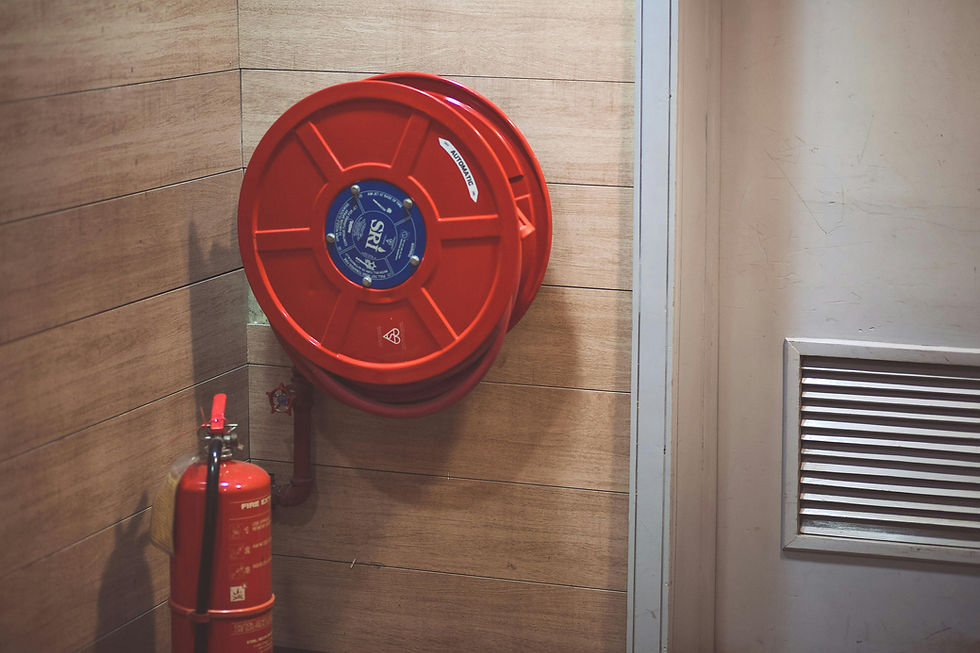
A professional fire risk assessment will thoroughly examine several critical areas of your
HMO.
1. Hazard Identification
The assessor will identify potential sources of ignition, such as faulty electrical equipment,
cooking appliances, and heating systems. They will also look for fuel sources, including
furniture, textiles, and accumulated waste, ensuring these are kept separate from ignition
sources.
2. Evaluating People at Risk
The assessment must consider who is at risk. In an HMO, this includes tenants, visitors, and
contractors. Special consideration must be given to vulnerable individuals, such as the
elderly, children, or those with disabilities, who may require assistance during an
evacuation.
3. Means of Escape
Adequate means of escape is arguably the most critical element of fire safety. The
assessment will verify that:
There are clear, unobstructed escape routes from every occupied room.
Escape routes are well-lit, ideally with emergency lighting.
Doors on escape routes can be opened easily from the inside without a key.
Stairways and corridors are adequately protected from fire ingress.
4. Fire Detection and Alarm Systems
Early warning is vital. The assessment will check that the HMO has an appropriate fire
detection system. For most HMOs, this means interconnected mains-powered smoke
alarms with battery backup on every storey and in every bedroom, plus a heat alarm in the
kitchen (typically a Grade D1, Category LD2 system, though requirements vary based on
property size and local authority guidelines).
5. Fire Doors and Compartmentation
Fire doors are essential for containing a fire and protecting escape routes. The assessor will
check that fire doors are fitted where required (e.g., on kitchens and bedrooms opening
onto escape routes), that they have functioning self-closing devices, and that intumescent
strips and cold smoke seals are intact. They will also assess the overall compartmentation
of the building to ensure fire cannot easily spread between floors or rooms.
6. Emergency Lighting and Signage
If the primary lighting fails during a fire, emergency lighting must illuminate the escape
routes. The assessment will verify the presence and functionality of emergency lighting and
ensure that clear, compliant fire safety signage (such as exit signs and fire action notices) is
displayed appropriately.
Who Should Carry Out the Fire Risk Assessment?

The legislation states that the fire risk assessment must be carried out by a "competent
person." A competent person is someone with sufficient training, experience, and
knowledge of fire safety principles and the specific type of building being assessed.
While it is technically possible for a landlord to conduct their own assessment for a small,
simple property, it is highly discouraged for HMOs. The complexities of HMO regulations,
combined with the severe legal liabilities involved, mean that relying on a professional fire
risk assessor is the only sensible strategy for serious property investors.
Professional assessors possess the specialized knowledge required to identify subtle
hazards, understand complex regulatory nuances, and provide a legally robust report that
can protect you from liability and ensure your insurance remains valid. The gap between a
DIY assessment and a professional one is often the gap between compliance and a criminal
conviction.
The Cost of Compliance vs. The Cost of Failure

A common question among landlords is the cost of a fire risk assessment. For a typical
HMO, a professional assessment generally ranges from £300 to £800, depending on the size
and complexity of the property and its location.
When viewed as a business expense, this cost is negligible compared to the potential
financial and legal ruin of non-compliance.
If you fail to carry out a fire risk assessment, or if you ignore the recommendations within it,
you expose yourself to:
Criminal Prosecution: Unlimited fines and potential imprisonment.
Civil Liability: Substantial compensation claims if a tenant is injured or killed.
Invalidated Insurance: Insurers will almost certainly refuse to pay out on a fire claim if
you cannot prove you had a valid fire risk assessment and implemented its findings.
Loss of Income: Local authorities can issue prohibition orders, preventing you from
renting the property, or revoke your HMO licence entirely.
Reputational Destruction: The damage to your brand and ability to operate in the
property sector can be permanent.
Strategic Steps for HMO Landlords
To ensure your portfolio remains compliant, profitable, and safe, you must adopt a
proactive approach to fire safety.
Commission a Professional Assessment: Engage a qualified, accredited fire risk
assessor to evaluate your HMOs.
Implement Recommendations Promptly: Do not let the report gather dust. Action the
recommendations, prioritizing high-risk issues immediately.
Establish a Maintenance Schedule: Fire safety is not a one-off event. Implement a
rigorous schedule for testing alarms (monthly), inspecting fire doors (regularly), and
servicing emergency lighting and extinguishers.
Maintain Impeccable Records: Document everything. Keep copies of the assessment,
maintenance logs, and any remedial work carried out. This "golden thread" of
information is your primary defence in the event of an inspection or incident.
Review Annually: Fire risk assessments are living documents. They must be reviewed
at least annually, or sooner if there are significant changes to the property, the
occupants, or the relevant legislation.
Navigating the complex landscape of UK property compliance requires expertise, diligence,
and a strategic mindset. At Essential Management Ltd and Stay & Co, we understand that
true portfolio growth is built on a foundation of unshakeable compliance and operational
excellence.
If you’d like to explore how current fire safety legislation applies to your specific portfolio,
or if you require a deeper assessment of your compliance strategy, our team can guide you.
We provide the strategic insight necessary to transition from reactive landlording to
professional, secure portfolio management.
Get in touch today to discuss how we can support your property business.
Frequently Asked Questions (FAQs)
Q: How often must a fire risk assessment be reviewed in an HMO?
A: Under current guidance, a fire risk assessment should be reviewed regularly. Industry
best practice dictates an annual review, or sooner if there are material changes to the
building, its use, or the occupants, or following a fire incident.
Q: Can I do the fire risk assessment myself to save money?
A: While the law requires a "competent person," conducting an assessment on an HMO
yourself carries immense legal risk unless you have specific fire safety qualifications.
Professional assessors provide the necessary expertise and legal protection that DIY
assessments lack.
Q: What happens if my HMO fails a local authority fire safety inspection?
A: Local authorities have robust enforcement powers. Depending on the severity of the
hazards, they can issue improvement notices, prohibition orders (closing the property),
levy substantial financial penalties, or initiate criminal prosecution.
Q: Do I need interconnected smoke alarms in my HMO?
A: Yes. Current regulations and HMO licensing conditions mandate interconnected mains powered smoke alarms (with battery backup) to ensure that if one alarm detects a fire, all alarms in the property sound simultaneously, providing early warning to all occupants.
Q: Does the Renters' Rights Bill affect fire safety requirements?
A: While the Renters' Rights Bill primarily focuses on tenancy security (such as the abolition
of Section 21), the overarching direction of travel in UK property law is towards higher
standards of safety and compliance. Maintaining rigorous fire safety protocols ensures you
remain ahead of the regulatory curve and protects your investment regardless of specific
legislative shifts.
Comments