
The Strategic Landlord’s Guide to HMO Safety Certificates in 2026: More Than Just Compliance


In the world of property investment, the term ‘safety certificate’ rarely sets the pulse racing. For the average landlord, it’s a box-ticking exercise—an administrative hurdle to clear. But for the professional, strategic HMO landlord, it represents something far more significant: a cornerstone of operational excellence, a shield against catastrophic liability, and a powerful differentiator in a crowded market.
Failing to maintain the correct safety documentation is not a minor oversight; it is a critical business failure. In the event of a serious incident, the first question from the fire service, the local authority, and your insurer will be: “Show me your certificates.” An inability to produce current, valid documentation can lead to unlimited fines, prosecution under the Health and Safety at Work Act, and, in the most severe cases, a prison sentence. Beyond the legal ramifications lies a more profound responsibility—the duty of care to the individuals who call your property home.
This guide moves beyond the basics. It outlines the six essential safety certificates every UK HMO landlord must hold for , regardless of whether the property requires a license. More importantly, it reframes them as tools for de-risking your portfolio and building a professional, sustainable, and profitable HMO business.
1. Gas Safety Certificate (CP12): The Non-Negotiable Annual Requirement

This is the most widely recognised safety obligation for any landlord. If your property contains any gas appliances (boiler, hob, oven, or fire), you are legally mandated to have them inspected annually by a Gas Safe registered engineer.
What a CP12 Covers (and What It Doesn’t)
The engineer’s inspection is a safety-critical process, not a maintenance visit. They will verify:
• Appliance Safety: That each appliance is operating correctly and at the right pressure. .
• Flue & Ventilation Integrity: That the flues and chimneys are clear and effectively removing dangerous fumes.
• Gas Tightness: That there are no gas leaks anywhere in the system.
Strategic Insight: Do not mistake a Gas Safety Certificate for a boiler service. A service is a proactive maintenance task designed to prolong the life of your boiler and uphold its warranty. A CP12 is a statutory legal requirement. A savvy landlord schedules both simultaneously to minimize disruption and cost, but understands they are distinct and equally vital functions.
Aspect Gas Safety Certificate (CP12) Build Service
Purpose Legal compliance and safety check Maintenance and efficiency
Frequency Annually (every 12 months) Annually (recommended)
Provider Gas Safe Registered Engineer Gas Safe Registered Engineer
Cost Approx. £80 - £120 Approx. £70 - £100
The Bottom Line: There is zero tolerance for failure here. A valid CP12 is your first line of defense.
2. Electrical Installation Condition Report (EICR): Your 5- Year Electrical Health Check

Since the regulations were updated, every private rented property in England must have a valid EICR. This is a comprehensive inspection of the entire fixed electrical installation. .
De-Risking Your Electrical System
A qualified electrician will conduct a thorough assessment of:
• The Consumer Unit (Fuse Box): Ensuring it is modern, safe, and provides the correct protection.
• Wiring, Sockets & Switches: Checking for deterioration, damage, or unsafe connections.
• Light Fittings: Verifying their safety and correct installation.
• Earthing & Bonding: Ensuring these critical safety features are in place to prevent electric shock.
Strategic Insight: An EICR will classify observations using codes: C1 (Danger Present), C2 (Potentially Dangerous), C3 (Improvement Recommended), and FI (Further Investigation Required). Any C1 or C2 issues must be rectified within 28 days. A professional landlord doesn’t just fix the C1s and C2s; they use the C3 recommendations as a forward-planning tool for future electrical upgrades, budgeting for improvements rather than reacting to failures.
Frequency: Every 5 years, or at the change of tenancy if the report is older than 5 years.
Cost: £150 - £350, depending on property size and complexity.
The Bottom Line: A satisfactory EICR is not just a piece of paper; it’s proof that you are providing a fundamentally safe electrical environment for your tenants.
3. Fire Detection & Alarm System Servicing: The Audible Lifesaver

This is an area where many landlords, even experienced ones, demonstrate a critical compliance gap. It is not enough to simply have smoke alarms; you must have a professional servicing regime in place.
System Grades & Servicing Requirements
The type of system and servicing frequency depends on the property’s size and risk profile:
• Grade D System (1-2 Storeys): Typically found in smaller HMOs, consisting of interlinked, mains-powered smoke and heat alarms with battery backup.
• What it covers: A qualified technician will test each alarm using specialist smoke and heat test equipment, verify that all alarms are interlinked, check battery health, and ensure units are not past their expiry date (usually 10 years).
• Frequency: Annually.
• Cost: £75 - £150.
• Grade A System (3+ Storeys): A more robust system with a central control panel, call points, and a mix of smoke and heat detectors, typically required for larger or higher-risk properties.
• What it covers: A comprehensive inspection of the entire system, including panel functionality, zone verification, sounder levels (ensuring they meet the required decibel level at the bedhead), and a logbook check.
• Frequency: Every 6 months.
• Cost: £150 - £400 per service.
Strategic Insight: The most common failure is a lack of interlinking. An amateur landlord tests an alarm with a broom handle and hears a beep. A professional landlord ensures that a fire in the kitchen triggers an alarm in the loft conversion, providing the vital seconds needed for escape. This is the difference between ticking a box and saving a life. Your service report is the evidence that you have taken this responsibility seriously.
4. Emergency Lighting Testing: Illuminating the Path to Safety

If your HMO has emergency lighting installed on the escape route (a common requirement from local authorities or under Building Regulations), it must be formally tested.
The 3-Hour Burn Test
This is not a simple flick of a switch. The test involves:
• A full duration test: The mains power to the lighting circuit is cut, and the lights must remain illuminated under their own battery power for a full 3 hours (or 1 hour for older systems, though 3 hours is now the standard).
• Luminance check: Ensuring the lights are bright enough to illuminate the escape route effectively.
Strategic Insight: Landlords often question the 3-hour requirement, arguing an evacuation takes minutes. This misses the point. The standard is designed to ensure the escape route remains lit for the entire duration of an emergency incident, including the time required for the fire and rescue service to attend and operate. It’s a test of resilience, not just function. A failed emergency light is a critical failure that renders an escape route unsafe in a power outage.
Frequency: A full duration test is required annually, with a shorter monthly functional check also recommended and often required by local authorities.
Cost: £100 - £250 for the annual test.
5. Portable Appliance Testing (PAT): Mitigating a Common Fire Risk

Any electrical appliance provided by the landlord that can be moved and plugged into a socket must be tested.
What Needs Testing?
This is a broader category than many realize. It includes:
• Kitchen Appliances: Microwaves, kettles, toasters, fridges, freezers.
• White Goods: Washing machines, tumble dryers.
• Communal Area Items: Televisions, vacuum cleaners.
• Tenant Room Items (if provided): Desk lamps, heaters, TVs.
Strategic Insight: The focus of PAT testing is not just on the appliance itself, but on the plug, fuse, and cable—the most common points of failure. Faulty fridges and freezers are a leading cause of electrical fires in residential properties. While tenants’ own appliances are their responsibility, the landlord is responsible for the safety of the fixed wiring they plug into. Providing PAT-tested appliances is a clear demonstration of your commitment to a safe electrical environment.
Frequency: Annually.
Cost: Typically charged per item (£1-£3) or as a fixed fee for the property (£60 - £150).
6. Fire Risk Assessment (FRA): The Master Document for HMO Safety
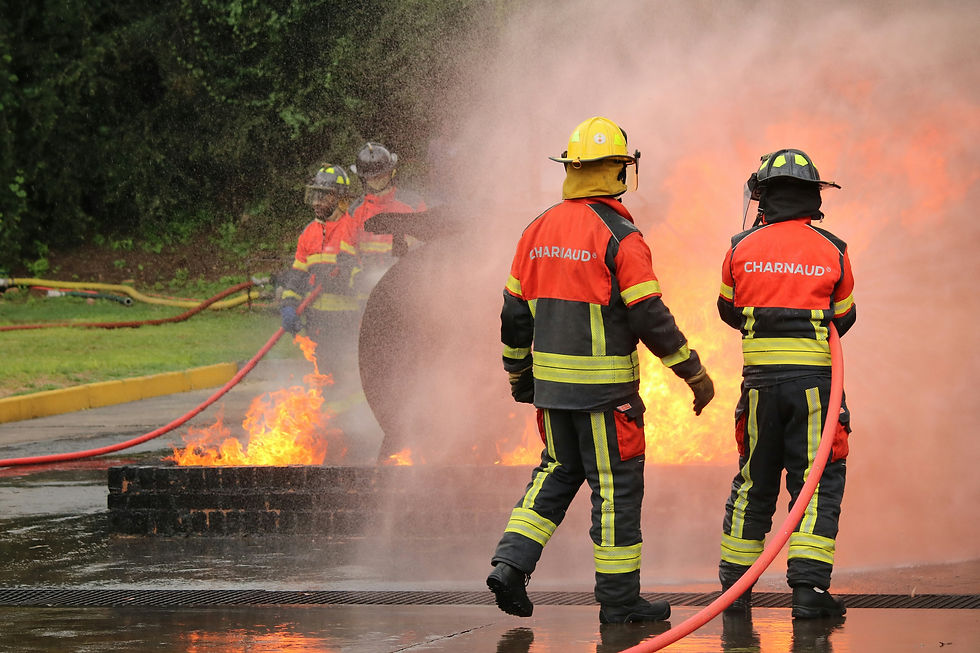
This is arguably the most important safety document you will hold. It is a comprehensive, living document that underpins your entire fire safety strategy.
What is a Fire Risk Assessment?
An FRA, conducted by a competent and qualified professional, will:
• Identify Fire Hazards: Sources of ignition (cookers, faulty wiring), sources of fuel (furniture, waste), and sources of oxygen.
• Identify People at Risk: Considering tenants with disabilities, language barriers, or other vulnerabilities.
• Evaluate & Mitigate: Assessing the adequacy of your existing fire precautions (fire doors, alarms, extinguishers) and recommending necessary improvements.
• Provide a Clear Action Plan: Detailing the steps you, the ‘Responsible Person’, must take to mitigate the identified risks.
Strategic Insight: An FRA is not a one-off task to be filed and forgotten. It is the blueprint for your property’s safety management. The law is clear: fire risk assessments are now a mandatory requirement for any building in England with two or more domestic premises. For HMOs, this is no longer a grey area. Lenders, insurers, and local authorities are increasingly demanding to see a current FRA before they will engage. It is your primary evidence that you have proactively identified and managed the specific fire risks within your property.
Frequency: The initial assessment should be reviewed annually, or immediately following any significant change to the property or its occupants.
Cost: £250 - £600, depending on the property’s size and complexity.
The Harsh Reality: The Post-Incident Investigation
Imagine the worst has happened. A fire has broken out in your HMO. Once the flames are extinguished, the investigation begins. The Fire & Rescue Service, the Police, and the Local Authority will form a joint investigation team. As the landlord, you will be formally interviewed, and you will be required to produce:
Your current Gas Safety Certificate (CP12).
Your current Electrical Installation Condition Report (EICR).
Your current Fire Alarm Servicing Certificate.
Your current Emergency Lighting Test Certificate.
Your recent PAT Testing Records.
Your current Fire Risk Assessment (FRA).
If you cannot produce this documentation, or if it is out of date, the investigation will shift from an inquiry into the cause of the fire to an inquiry into your negligence. The consequences are not abstract; they are real and severe.
This is not about compliance; it’s about consequence.
Frequently Asked Questions (FAQs)
Do these rules really apply to my small, unlicensed 3-bed HMO?
Yes, absolutely. The legislation underpinning most of these requirements (e.g., The Regulatory Reform (Fire Safety) Order 2005, The Electrical Safety Standards in the Private Rented Sector (England) Regulations 2020) applies to all HMOs, regardless of their licensing status. Local authorities expect the same standards of safety in all shared houses.
Can I save money by doing some of these checks myself?
While you should perform regular visual checks and test smoke alarms monthly (the ‘push-button’ test), you cannot self-certify the formal inspections. Gas safety, EICRs, and Grade A fire alarm servicing must be done by qualified, registered professionals. Using a handyman for these tasks is a false economy that will leave you dangerously exposed.
What’s the difference between a Fire Risk Assessment and a Local Authority HMO inspection?
A council inspection is a check against their prescribed list of standards (e.g., room sizes, amenity provision). A Fire Risk Assessment is a far more holistic and in-depth analysis of fire hazards and risks specific to your property and your tenants, conducted under the Fire Safety Order. A valid FRA is your legal defense; a council inspection report is not.
My EICR came back with C3 ‘Improvement Recommended’ codes. Do I have to fix them?
Legally, you only have to rectify C1, C2, and FI codes. However, a strategic landlord views C3s as a roadmap for future investment. They indicate areas where your installation is not up to current best practice. Addressing them proactively during planned voids can prevent them from becoming more serious issues later and demonstrates a higher standard of care.
Where should I keep all this paperwork?
Digital copies should be stored securely in the cloud. Hard copies of the key certificates and the Fire Risk Assessment action plan should be displayed in a communal area of the HMO, typically on a residents’ notice board. This ensures tenants are informed and provides immediate access for emergency services.
Beyond the Certificate: Your Next Strategic Move
Viewing these six certificates as a bureaucratic burden is a rookie mistake. For the professional landlord, they are the bedrock of a resilient and profitable portfolio. They reduce your liability, protect your tenants, and satisfy the increasing demands of lenders and insurers.
But compliance is just the baseline. True operational excellence means having a system to manage these renewals proactively, using the insights from the reports to plan future capital expenditure, and leveraging your proven safety record as a mark of quality to attract and retain the best tenants.
If you’re ready to move beyond simply collecting certificates and want to build a truly professional HMO operation, our team can help. We can assess your current compliance status and guide you in developing a robust, forward-looking safety strategy for your portfolio.
Get in touch today for a no-obligation discussion about how we can help you de-risk and optimize your property investments.
Disclaimer: This article provides general guidance only and does not constitute legal, tax, or financial advice. All landlords and property investors should seek independent professional advice tailored to their specific circumstances before making any decisions.


Comments